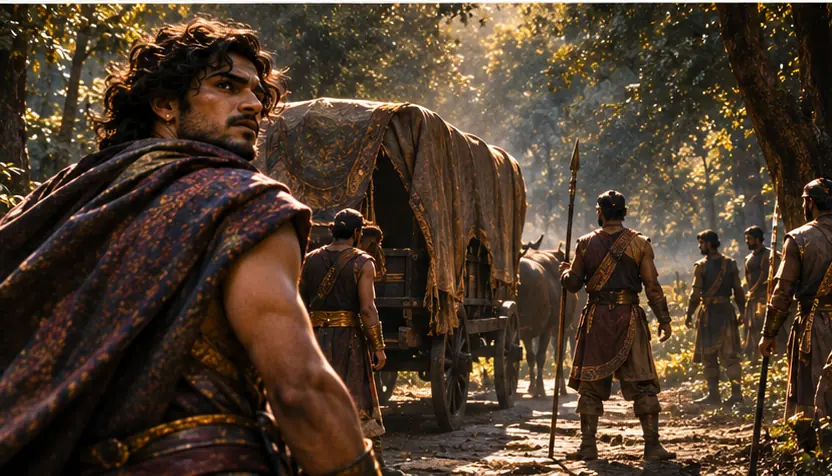
The cart betrayed Pavan before its false bottom was found. One wheel struck the stone of the upper passage with a dull, uneven knock. The gatekeeper, who had repaired carts before joining the watch, told the driver to stop. Pavan said the axle had been mended after a rut broke it on the surface road. The gatekeeper crouched beside the wheel and saw a peg cut from soft wood. No competent cartwright would have used it. He asked Pavan to unload the grain. The trader protested that the sacks had already been counted at the lower market. The gatekeeper called two men from the watch. Beneath the grain they found six iron blades and a packet of letters addressed to men in Lanka.
Pavan said the blades were tools. The gatekeeper held one against the light and asked what work required a sharpened edge on both sides. Pavan said nothing. He was taken to the guardhouse, where the captain demanded to know who had paid him. Pavan would say only that he had been given a fee. Before evening, rumours had turned six blades into an army and a packet of letters into orders for a rebellion.
Sumali was called from his chamber. He read the letters himself. They promised money to former soldiers willing to open a warehouse gate on a specified night. No king was named. No banner was mentioned. The plan was clumsy, but the danger was real: men could be killed in Lanka, and Kuber's officers would follow the trail back to Rasatal. The captain asked permission to seal the upper passage until the conspirators were found.
“For how long?” Sumali asked.
“Until it is safe.”
“Then you ask for a gate that may never open.”
The captain pointed to the blades. “Would you have me leave the road free for every fool who thinks he can recover Lanka with a knife?”
Sumali understood the fear. He had spent years fearing the day his people would be found beneath the earth with too few guards at the entrance. Yet the passage carried medicines, salt, news and the small commerce that kept the settlements alive. Closing it would punish families who had nothing to do with the plot. He ordered Pavan held for questioning, the merchant summoned and the letters copied. He refused to close the gate.
The first night after Pavan's arrest, the guardhouse was crowded with men who had come to accuse one another. A charcoal merchant claimed his rival had been sending messages to Lanka. A porter said the merchant himself had carried an unmarked chest across the upper road. The captain wrote down every accusation, pleased by the sudden flood of information. Ila read the register and found that none of the statements included a date, a witness or a description of the supposed offence. She asked the captain to distinguish what had been seen from what had been heard. He said a crisis was no time for pedantry. Ila replied that the crisis would last as long as anyone could purchase an arrest with a rumour.
Pavan sat behind the guardhouse screen with his wrists bound. He had been paid to carry the blades and had known they were not tools. He also had a daughter with a chest illness and a debt to the grain merchant who had financed the journey. When Sumali questioned him, Pavan admitted the payment but refused to name the buyer. Sumali asked whether loyalty to a merchant was worth imprisonment. Pavan answered that the merchant held the deed to his family's room. Sumali had the deed examined. It was lawful, though the interest charged upon it was not. The king ordered the debt records brought to the hearing. He could not make Pavan innocent by discovering why he had accepted the work, but he could prevent the merchant from using the debt to keep him silent.
At dawn a second cart arrived. It carried a woman whose son had broken his leg in the upper hills. The boy lay on a bed of straw, feverish and pale. The guard captain refused passage while the inquiry continued. The woman shouted that she had a healer waiting below. When Ila arrived with a basket of supplies, she found the cart stopped between two rows of armed men. The boy was moaning each time the horse shifted its weight.
Ila went straight to Sumali. She did not ask him to settle the conspiracy. She asked him to read the order his captain had issued after the council dispersed. It said all carts could be delayed at the discretion of the watch. Sumali had signed an order permitting inspections. He had not authorised an indefinite halt. The captain argued that the difference was necessary for security.
“Then put your name on the difference,” Sumali said.
The captain stared at him. Sumali took the order, crossed out the phrase and wrote a limit: no delay beyond the time needed to inspect the cargo unless evidence of an offence was recorded. The woman and her son were admitted. The healer set the leg before noon. By evening the fever had eased. Ila entered the delay and its cause in the gate register.
Pavan's wife arrived at the guardhouse with their daughter wrapped in a shawl. The child was old enough to ask why her father stood behind a screen and young enough to think the screen was there to keep out the cold. The captain ordered them to wait in the passage. Ila found the girl coughing beside a jar of water no one had offered her. She took them to the clerk's bench and asked whether the debt contract had been copied. It had not. The clerk said the merchant's seal was sufficient. Ila asked him to read the interest clause aloud. He read the first line, hesitated, and fetched the original.
The contract charged interest on unpaid interest. It also gave the lender the right to take possession of the family's room if Pavan missed a payment, even when the missed payment resulted from work the lender himself had assigned. Ila carried the paper to Malyavan. He asked who had drafted it. The clerk named a scribe who had worked for three merchants. Malyavan sent for the scribe and the merchants' account books. The captain complained that the court was wasting its time on a debtor when six blades had been found in a cart. Malyavan said the blades would still be there when the contract had been read.
Pavan was brought out to answer questions. He admitted that he had known the goods were weapons. He had not known the letters promised to open a warehouse gate. When asked why he had refused to name the merchant, he looked toward his daughter. The child had fallen asleep against her mother's shoulder. He said he had been told the family would be turned out before the next market day if he spoke. Sumali listened without offering pardon. He wanted to know whether the threat had been made before or after the weapons were loaded. Pavan said before. The answer did not absolve him, but it changed the order in which the court would hear its witnesses.
At the hearing the merchant came dressed in mourning white, as though he had been the injured party. He claimed the blades were intended for the defence of exiles who might return to Lanka. Malyavan asked who had authorised him to speak for those exiles. The merchant said any loyal man should act when a king hesitated. Sumali felt the insult, and the temptation to answer it with a punishment that would satisfy the hall. He asked instead for the letters to be read. Their instructions named warehouses, prices and buyers, but no displaced family that would benefit. Malyavan turned the last leaf toward the room. Beside a list of warehouse locks, the merchant had entered the price he expected to pay for goods after their owners fled. Pavan stared at the figure. It was less than the fee he had been promised for carrying the blades.
A young guard suggested that the court should execute him as a warning. Pavan's wife, who had come to the hearing with their child, began to cry. The merchant did not look at her. Sumali remembered Mali's last council, when the men most eager for battle had not been the ones who would carry the wounded from the ships. He told the guard to put away his sword. Malyavan called for the written charges and the witnesses who had signed them. The guard sat down, his face still red.
The debt records led to the merchant from the southern markets. A search authorised by the council found a second set of letters and payments entered under his own mark. He had hoped to profit from violence in Lanka by buying abandoned goods cheaply when trade stopped. Sumali wanted him driven out. Malyavan insisted the charge be heard in the open chamber, where Pavan and the merchant could answer it. The council confiscated the blades, barred the merchant from trade for a year and ordered restitution from his profits. Pavan, who had knowingly carried the weapons, was required to repay his fee and work on the road he had endangered. His daughter's medical debt was examined separately; it could not lawfully be used to compel his silence.
The captain protested that such punishments would not frighten conspirators. Sumali replied that the watch existed to protect the settlements, not to invent new enemies among them. He heard the words leave his mouth and caught Tarini at the back of the hall, checking the entry against the clerk's copy. She did not look up. The captain was still waiting for an answer, and Sumali had already given it.
That night the gatekeeper replaced the damaged peg in Pavan's cart. He had no affection for the trader, but the road needed carts and the watch needed men who could recognise a bad repair. Beyond the upper passage the wind moved through the trees. Sumali stood at the threshold for a long time. He had received no new word from Kaikasi since Rujan returned, and the silence had begun to feel like another road he could neither guard nor close. Behind him the gatekeeper was still arguing with the watch about the cost of a new axle peg. The six blades had been confiscated, but someone had paid for them, someone had expected to receive them, and no court sentence had told Sumali how many more were already on the road.